Dogs, cats, or other animals? How to include your pets in your preparedness plan.
Your pets are counting on you
When we talk about household preparedness, it's easy to focus on the human members of the family and overlook the four-legged, feathered, or finned ones. But roughly half of Norwegian households include at least one pet, and those animals depend entirely on their owners for food, water, shelter, and safety. They can't stock their own supplies, they can't read emergency alerts, and they certainly can't evacuate themselves.
The good news is that preparing for your pets follows the same basic logic as preparing for the rest of your household: a little food, a little water, the right documents, and a plan for what to do if you need to leave. None of it is complicated. Most of it takes an afternoon at most. The key is simply remembering to do it — which is where many pet owners fall short, not out of carelessness, but because it never occurred to them.
Food and water: the basics
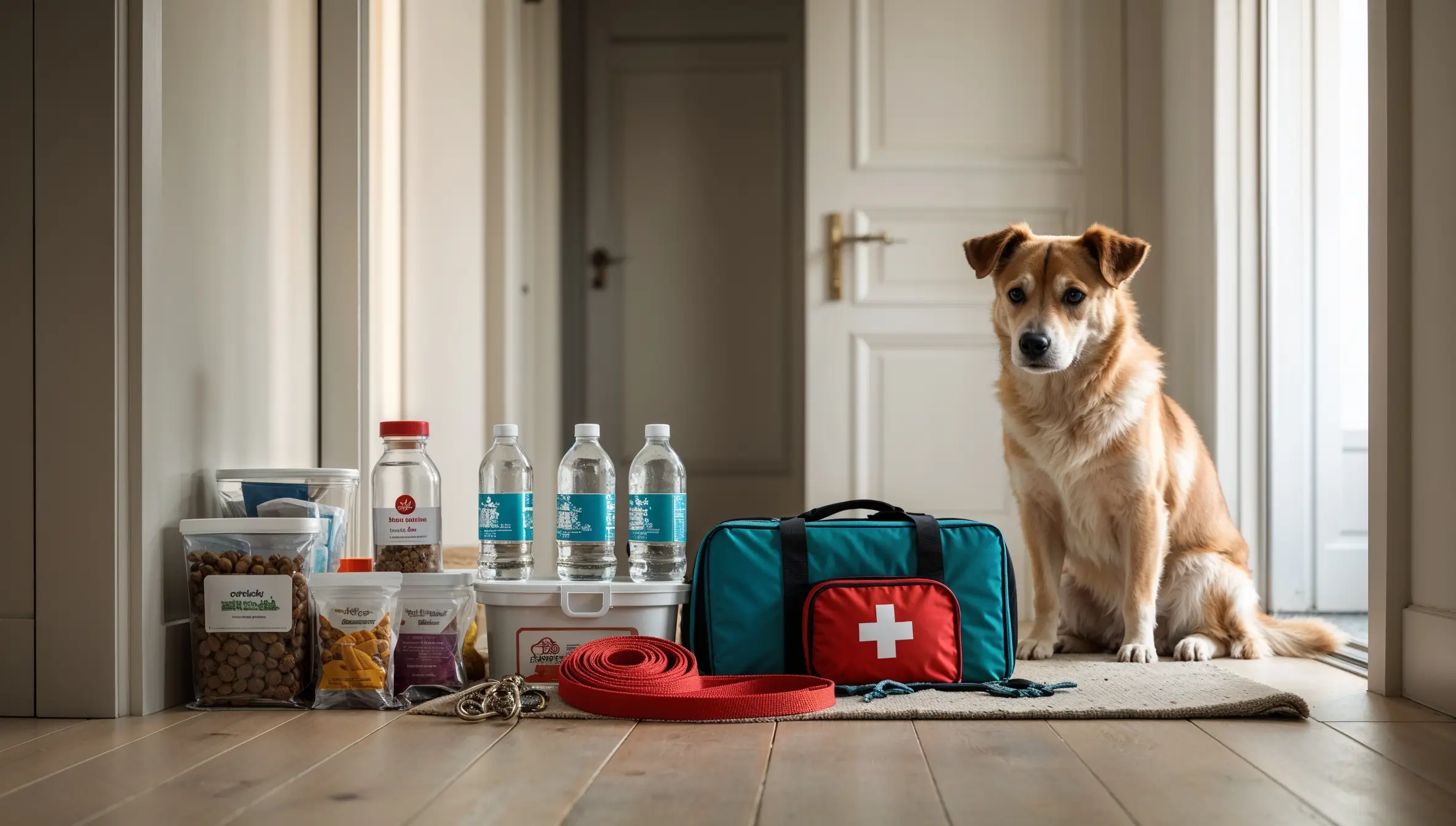
Start with the most fundamental need: making sure your pet can eat and drink for at least a week without a trip to the shop. For dogs and cats, that means storing a week's supply of their regular food in a sealed, airtight container. This is important — a crisis is not the time to introduce a new brand or type of food. Animals have sensitive digestive systems, and switching food abruptly can cause stomach upset, diarrhea, or refusal to eat, all of which you really don't need on top of everything else.
For water, the rule of thumb depends on the size of your animal. A medium-sized dog needs roughly half a liter per day; a large breed might need a full liter or more. Cats drink less but still need a reliable supply. Include your pets' water needs when you calculate your household's total water storage, and consider keeping a collapsible bowl in your emergency kit so you have something clean to serve it in.
Don't forget a few treats or favorite chews, either. In a stressful situation, a familiar treat does wonders for an anxious animal — and for the owner trying to keep that animal calm.
Medications and veterinary information
If your pet takes regular medication — for a heart condition, thyroid issue, arthritis, allergies, or anything else — try to keep a buffer supply on hand rather than running down to the last pill before refilling. A week's extra supply is a reasonable target. Talk to your vet about whether they can prescribe a slightly larger quantity to make this easier.
Beyond medication, keep a written note of your vet's name, clinic address, phone number, and emergency after-hours contact. In an extended crisis, your usual clinic might not be reachable, so it's also worth knowing the nearest emergency veterinary hospital and having that information stored somewhere accessible — not just in your phone, which might be dead.
If your animal has specific health conditions that a rescuer or temporary caretaker would need to know about, write them down clearly and keep that note with your pet's emergency supplies. Something as simple as "takes one thyroid tablet twice daily with food" could make all the difference if someone else needs to care for your pet temporarily.
Identification and documentation
Microchipping is standard practice in Norway, and most dogs and many cats are already chipped. But a microchip is only as useful as the information linked to it. Take a moment to verify that your contact details in the microchip registry are current — especially your phone number and address. If you've moved or changed numbers since you registered the chip, update it now. In an emergency, a found animal with outdated contact details might as well not be chipped at all.
In addition to the microchip, keep a physical ID tag on your pet's collar with your phone number. Tags are low-tech and instantly readable by anyone who finds your animal — no scanner required. They're a simple redundancy that costs almost nothing.
Finally, keep a recent, clear photo of your pet stored somewhere you can access even without your phone — a printed copy in your emergency binder, for instance. If you're ever separated from your animal, a photo is far more effective than a verbal description when asking neighbors or posting notices. Include a note of any distinctive markings or features.
Transport: practiced and ready
If you need to evacuate, you need to move your pet safely and quickly. For cats and small dogs, that means a carrier or crate that's sturdy, well-ventilated, and the right size. For larger dogs, it means a reliable leash and collar or harness — ideally an extra set stored with your emergency kit, because the one hanging by the front door can easily be forgotten in a hurry.
Here's the critical part: practice beforehand. A cat that has never been in a carrier will fight, panic, and scratch when you're trying to stuff it in during a stressful evacuation. A dog that has never ridden in a crate will resist and add chaos to an already tense situation. Make the carrier a familiar object. Leave it open in the house with a blanket inside. Feed treats in it occasionally. The goal is that when you actually need it, getting your animal in is a calm, five-second task rather than a ten-minute wrestling match.
For birds, reptiles, or other small animals, have an appropriate travel container ready and know how to maintain their temperature requirements during transport. Cold-blooded animals in particular can deteriorate quickly if exposed to winter temperatures without protection.
Stress management: keeping them calm
Animals are extraordinarily sensitive to the emotional state of their owners. A dog doesn't understand that the power is out or that the roads are flooded, but it absolutely understands that you're tense, your voice is different, and the normal routine has vanished. Cats may hide, refuse to eat, or become unusually clingy. Dogs may pace, whine, or become destructive.
The single most effective thing you can do is maintain routines as closely as possible. Feed at the usual times. Walk the dog at the usual times, even if the walk is shorter or on a different route. Provide familiar items — a favorite blanket, a well-loved toy, a piece of clothing that smells like you — in whatever space the animal is staying. These small anchors of normality have a powerful calming effect.
If your pet is particularly anxious by nature, talk to your vet in advance about whether mild anti-anxiety medication or supplements might be worth having on hand. Some animals genuinely struggle with disruption, and having a plan for that is just as valid as having a plan for food and water.
Evacuation: know your options
Not all emergency shelters accept animals. This is a hard reality that catches many pet owners off guard. If you're directed to an evacuation center, you may be told that your dog or cat cannot come inside. Having a backup plan prevents you from being forced to choose between your safety and your pet's.
Start by identifying two or three people — friends, family members, neighbors — who live outside your immediate area and would be willing to take your pet temporarily. Have that conversation now, not during a crisis. Make sure they know your pet's basic needs and have your contact information. If your animal has specific care requirements, write them down so the temporary caretaker isn't guessing.
Look into local animal welfare organizations and boarding facilities as well. Some municipalities have arrangements for emergency animal housing, and some kennels will offer reduced rates or free boarding during declared emergencies. Knowing these options in advance means you can act quickly if needed.
Neighbors helping neighbors
Pet owners in the same building or neighborhood are a natural support network. If you're evacuated but your neighbor isn't, they might be able to check on your cat. If you run out of dog food, the household down the street with the same breed might have extra. If you need to make a trip but can't bring the dog, someone nearby can watch it for a few hours.
These arrangements work best when they're set up in advance rather than improvised under pressure. A brief conversation with fellow pet owners in your building — "if something happens and one of us can't get home, could we check on each other's animals?" — creates a safety net that costs nothing and could mean everything. Exchange keys or access codes if you're comfortable doing so, and make sure each person knows where the pet food and any medications are stored.
Next step
Add your pet's supplies and needs to your household preparedness overview in the Min Beredskap app. Tracking food, medication, and carrier readiness alongside the rest of your emergency kit ensures nothing gets overlooked — for any member of the family, two-legged or four.