Who do you call first? How to create a simple plan your whole family can follow when crisis strikes.
Why communication breaks down first
In a crisis, communication is usually the first thing to fail and the last thing people plan for. Mobile networks become overloaded within minutes when large numbers of people try to call or text at the same time. A prolonged power outage takes down cell towers once their backup batteries run out — typically within a few hours. Internet-based services like messaging apps and email go silent with them.
The result is a gap that feels enormous: you can't reach your family, you don't know what's happening, and the uncertainty itself becomes a source of stress. A communication plan doesn't prevent the infrastructure from failing, but it means your family already knows the answers to the critical questions — who to contact, how to reach each other, and where to meet — before anyone picks up a phone.
Build the plan before you need it
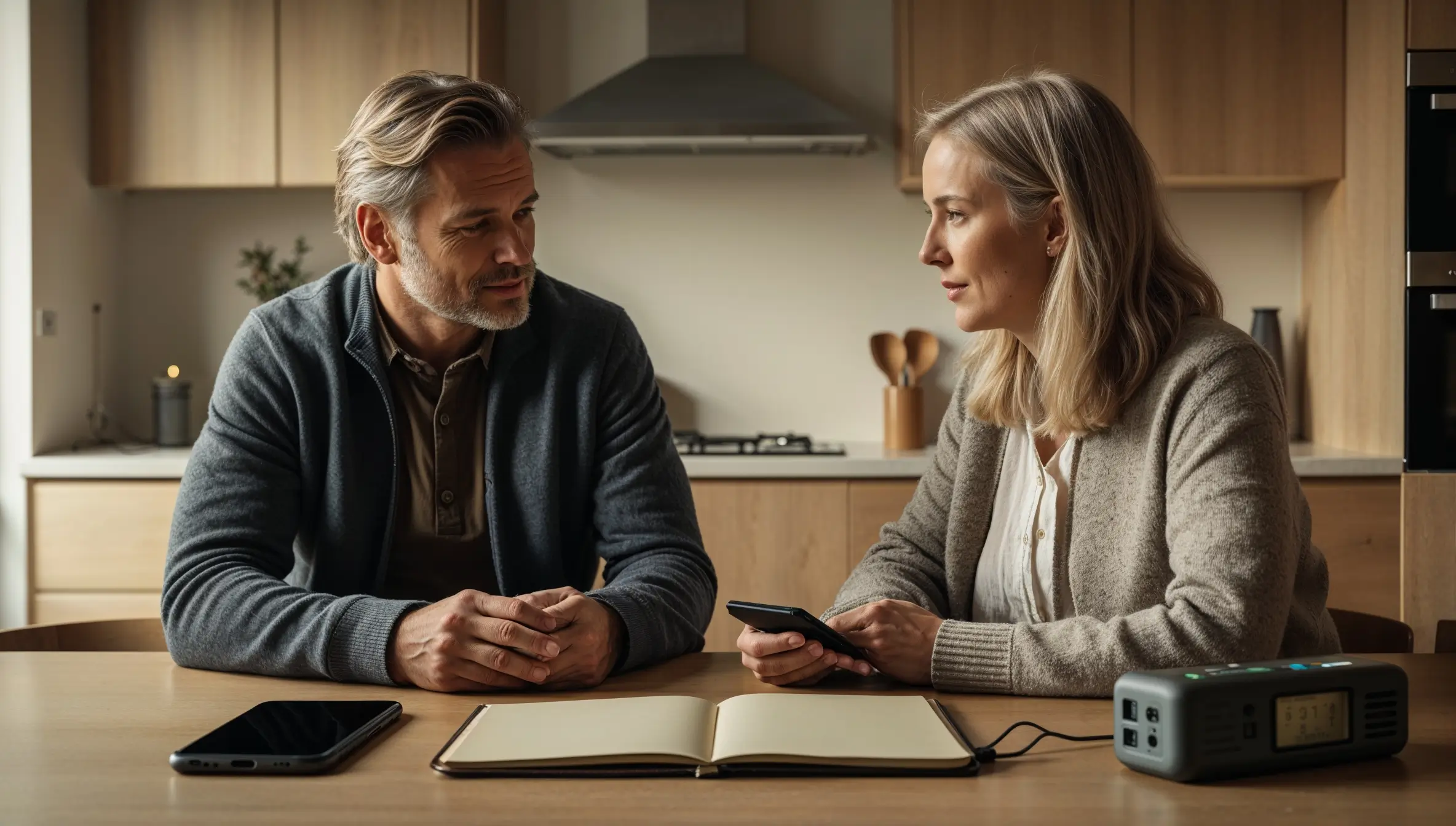
The entire point of a communication plan is that it exists before anything goes wrong. Writing one takes about twenty minutes around the kitchen table. Start with three simple questions: if we're separated, who do we contact first? How do we reach that person if phones don't work? Where do we physically meet?
Discuss these questions openly, including with children old enough to understand. The goal is that every family member can answer them from memory. A plan that lives only in one person's head or buried in a drawer doesn't work when that person isn't reachable or the drawer is in a house you've evacuated.
Choosing a contact person and meeting points
Designate one person outside your immediate area as the family's primary contact. This could be a grandparent, a sibling, or a close friend who lives in a different town or region. The logic is simple: local networks may be jammed, but a call to someone outside the affected area often gets through. Each family member calls or texts the contact person to report their status, and that person relays information. It turns a web of frantic calls into a single hub.
Pick two meeting points. The first should be close to home — a neighbor's house, the mailbox at the end of the street, or a nearby playground. This covers situations where you need to leave the house quickly but aren't leaving the area. The second should be further away, outside your immediate neighborhood: a school, a community center, or a relative's home. This is for larger-scale events where the local area isn't safe.
Write all of this down on a small physical card for each family member. Include the contact person's name and phone number, the two meeting points, and any other critical numbers — emergency services, your doctor, your insurance company. Laminate the cards or tuck them into waterproof sleeves. A card in a wallet or a child's backpack works when a dead phone doesn't.
The official emergency channel: NRK P1
In Norway, NRK P1 is the designated emergency broadcast channel. When other media go dark — no internet, no TV, no streaming — NRK P1 continues to broadcast critical information via radio. It's the channel authorities use to reach the public during serious incidents.
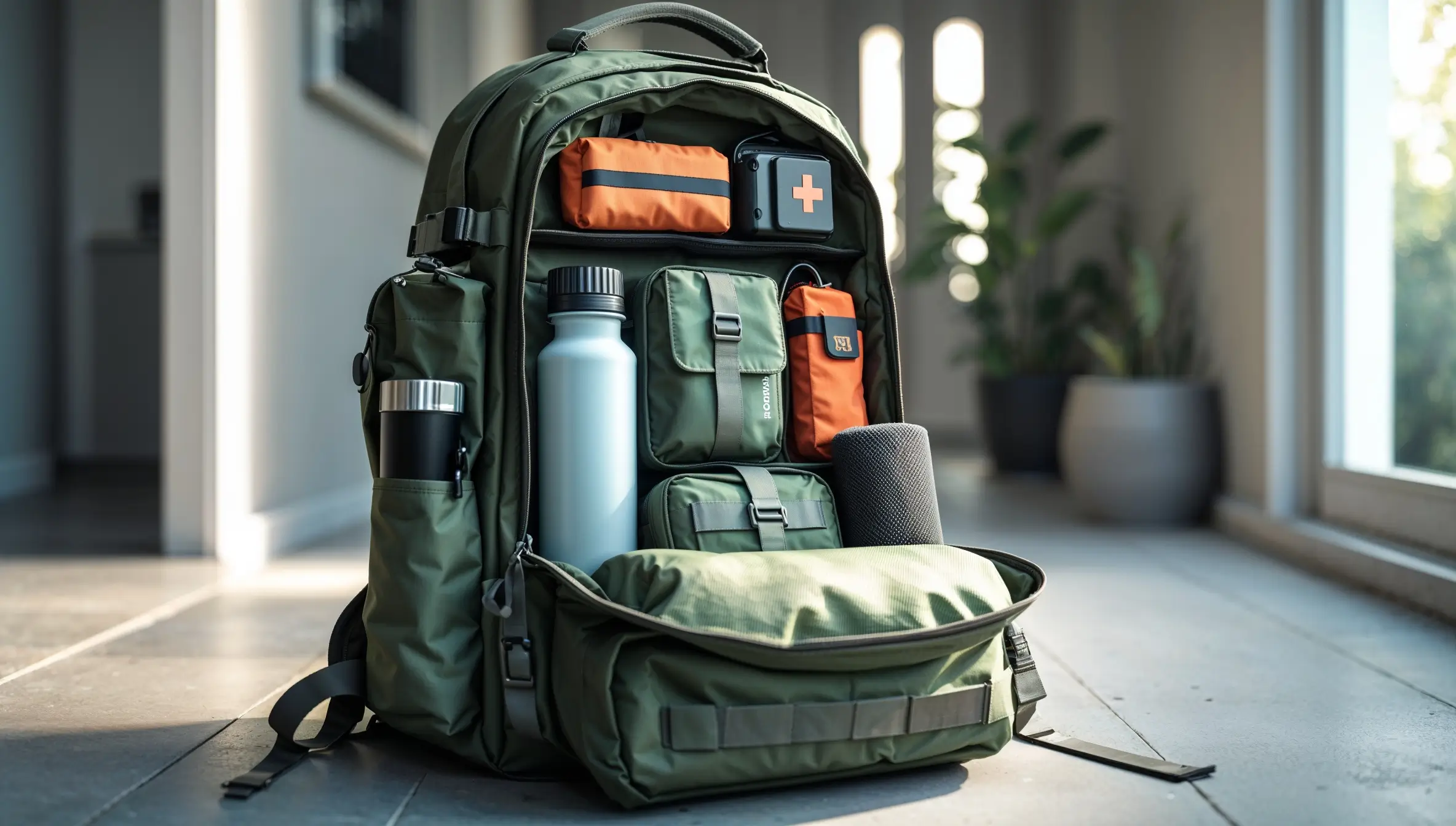
To receive it, you need a radio that doesn't depend on the power grid. A battery-powered DAB radio is the standard recommendation. Keep one at home with spare batteries, and consider a small one for the car. Some hand-crank models also work well and eliminate the battery concern entirely. If you do nothing else for communication preparedness, owning a working radio with batteries is the single most impactful step.
Norway also uses Nødvarsel, a mobile emergency alert system that pushes warnings directly to phones in an affected area. It works over 4G and 5G networks without requiring an app or subscription. It's a valuable tool, but it depends on functioning cell infrastructure and a charged phone — which is exactly what you may not have in a prolonged outage. Think of it as a complement to your radio, not a replacement.
When networks fail: alternatives that work
When your phone shows no signal, you still have options. A car radio picks up NRK P1 and other FM/DAB stations. If your home WiFi router is powered (perhaps by a generator or battery backup), WiFi calling can bypass the mobile network entirely. It's worth enabling on your phone now so it's ready when you need it.
Neighbors are an underrated resource. If you're on one mobile operator and the network is down, a neighbor on a different operator might still have service. Physical proximity and a brief conversation can do what technology can't. Similarly, if someone nearby has a landline — rare but not extinct — those networks sometimes hold up longer than mobile ones.
Keep a printed list of important phone numbers. Most of us haven't memorized a phone number in years, and that becomes a real problem when the device holding all your contacts is dead. Write down the numbers that matter most and keep copies in your wallet, your grab bag, and your home.
Source criticism: verify before you act
During a crisis, information spreads fast — and not all of it is accurate. Social media fills with rumors, speculation, and outright misinformation, sometimes within minutes. A dramatic claim shared thousands of times is not necessarily true. Before acting on information, ask where it came from. Official sources — DSB (the Norwegian Directorate for Civil Protection), local municipality websites, NRK, and police communications — are the channels to trust.
If you hear something alarming from an unofficial source, wait for confirmation before making decisions. Passing along unverified information, even with good intentions, can cause confusion and panic. Teach your family this principle too: check the source, then act.
Practice makes it stick
A plan that nobody remembers is the same as no plan. Go over your communication plan with the whole family at least once or twice a year. Talk through the scenarios: what if we're at work and school when something happens? What if phones don't work? Where do we go? Who do we call?
Make sure children can recite the contact person's name and number, and that they know both meeting points. You don't need to make it frightening — frame it the same way you'd discuss a fire drill. The goal is familiarity, not anxiety. When the information is practiced and routine, it's available under stress without having to think hard about it.
Update the plan when circumstances change: a new school, a new address, a new contact person. Keep the cards current. A few minutes of maintenance preserves something that could matter enormously.
Next step
Use Min Beredskap to store your family's contact plan, meeting points, and key phone numbers in one place. The app keeps everything accessible even offline — exactly when you need it most.