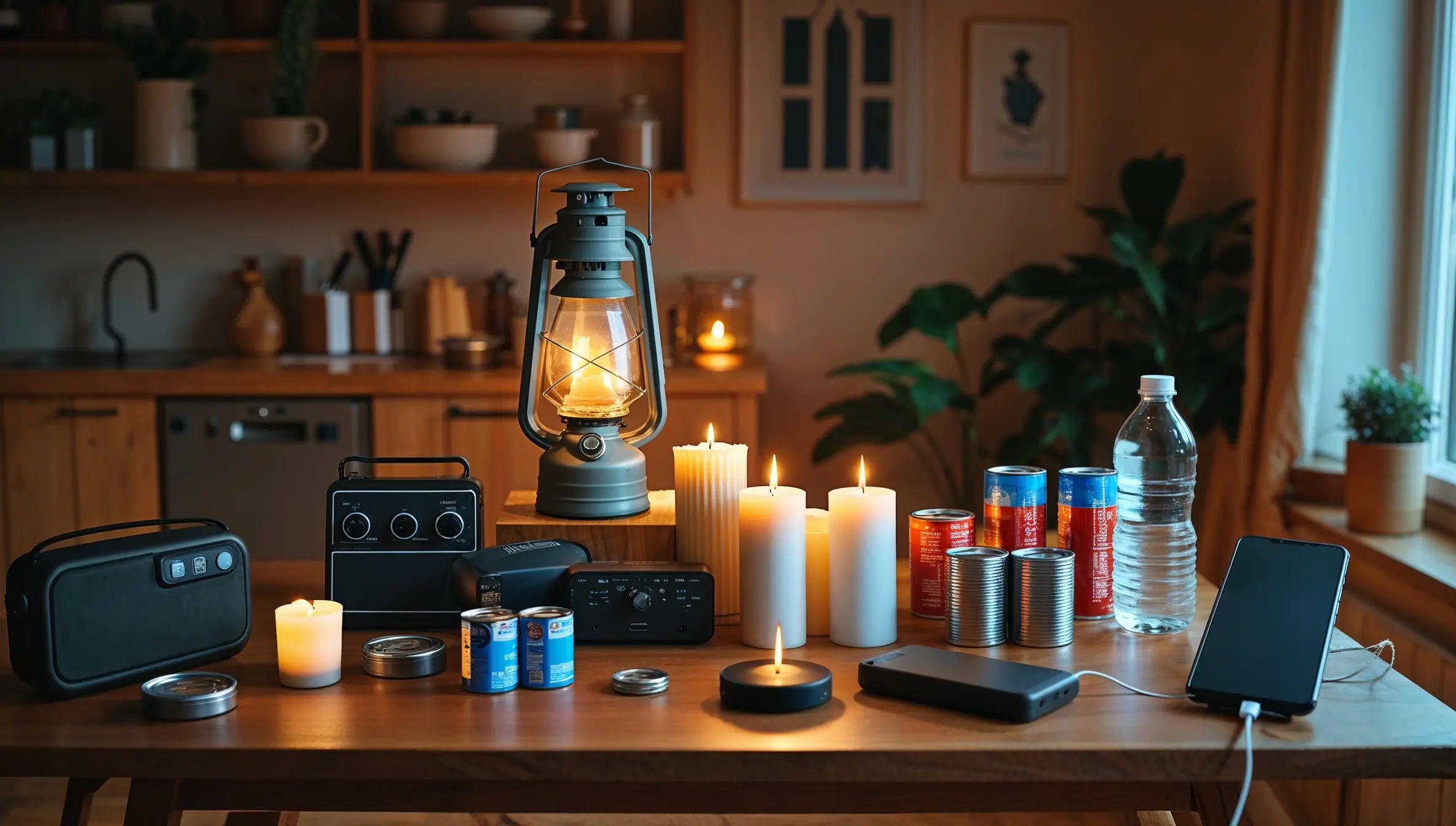
A practical checklist for power outages: light, warmth, food, communication, charging, and safety.
Why power outages matter more than you'd expect
When most people think of a power outage, they picture sitting in the dark for an hour or two, maybe lighting a candle and waiting it out. But a prolonged outage — one lasting a day or more — affects far more than just your lights. Without electricity, you may lose heating, running water (if your building uses electric pumps), sewage systems, the ability to cook, your fridge and freezer, internet, mobile network coverage, payment terminals, EV charging, and any medical equipment that runs on mains power.
Norwegian authorities recommend that every household should be prepared to manage for at least one week without external assistance. That might sound extreme, but severe weather events, infrastructure failures, and other disruptions have caused multi-day outages in Norway in recent years. The households that coped best were the ones that had thought about it in advance — even just a little.
The good news is that handling a power outage is largely about having the right small items on hand and knowing what to do in the first hours. This article walks through a practical approach, organized by time.
The first 15 minutes: orient yourself
The moment the power goes out, resist the urge to fumble around in the dark. If you've prepared even minimally, you'll have a flashlight in a known location — and that's where you start.
Check your breaker panel first. If only your home is affected, it may be a tripped breaker rather than a grid outage. Flip the main breaker off and back on. If that doesn't work, look outside — are your neighbors' lights on? If the whole area is dark, it's a grid-level issue and you're in waiting mode.
Grab your phone and check its battery level. If you have a power bank, start charging the phone immediately while the power bank is still full. You'll want that phone for communication and information later, so conserving its battery from the very start is important. Switch to low-power mode, reduce screen brightness, and close apps you don't need.
If you have children, get them settled with a flashlight of their own. A headlamp is even better — it frees up their hands and makes the whole situation feel more like an adventure than a crisis.
Keeping warm when the heating stops
In a Norwegian winter, heat loss is the most serious practical concern during an extended outage. Electric heating, heat pumps, and even many hydronic systems with electric circulation pumps will stop working. Your home will start cooling within hours, and how quickly depends on its insulation, outdoor temperature, and wind.
The most effective immediate step is to reduce your living space. Close doors to rooms you don't need — bedrooms, bathrooms, spare rooms. The smaller the volume of air you're trying to keep warm, the longer your body heat and any remaining warmth will last. If you have a room with a wood-burning stove or fireplace, make that your base.
Hang blankets or heavy curtains over windows, especially if they're single-glazed or drafty. Windows are where most heat escapes. Even a duvet draped over a curtain rail makes a noticeable difference. If you have rugs, put them down on bare floors — cold floors sap heat from your feet surprisingly fast.
Layer your clothing. Thermal underwear, wool mid-layers, and a warm hat make an enormous difference. You lose a lot of heat through your head, so wearing a beanie indoors might look silly but it works. Keep extra blankets and sleeping bags somewhere accessible — not packed away in a hard-to-reach storage room.
Think about your neighbors
This is something that deserves its own section because it's both practical and important. If you can't adequately heat your home — perhaps you live in an all-electric apartment — consider arranging in advance to stay with a neighbor, friend, or family member who has a wood stove or alternative heat source. Having that conversation before an emergency makes it a simple plan rather than a desperate request.
Equally, if you're the household that can heat without electricity, think about offering. An elderly neighbor living alone, a family with a baby, someone with a health condition — these are the people who are most vulnerable when the temperature drops, and a warm room and a hot cup of coffee can make an enormous difference.
Community resilience is personal resilience. The more your immediate neighbors have a rough plan for helping each other, the better everyone does.
Light and fire safety
Every person in the household should have access to their own light source. Flashlights and headlamps with spare batteries are the safest and most practical option. Store them in a fixed, known location — a drawer in the hallway, a hook by the front door — so nobody has to search in the dark.
Candles create atmosphere, but they also create risk. Open flames near curtains, blankets, paper, and children are a genuine fire hazard, and house fires during power outages are more common than you'd think. If you do use candles, place them on stable, non-flammable surfaces, never leave them unattended, and keep them well away from anything that can catch fire.
This is a good moment to verify that your smoke detectors have working batteries and that you know where your fire extinguisher is. During an outage, your margin for error with fire is thinner — emergency services may be stretched, and you may not be able to call as easily if mobile networks are congested.
Food and water during an outage
If you've followed the pantry and water storage advice in our other articles, you're already well positioned here. The key principle during an outage is to eat perishables first. Start with whatever's in the fridge — it'll be at room temperature within a few hours. Then move to freezer items, which will stay safe longer if you keep the door closed.
Once the fresh and frozen food is gone, switch to your shelf-stable pantry supplies. Prioritize no-cook options if you don't have an alternative heat source: canned fish on crackers, bean salad, peanut butter on crispbread, canned fruit. If you have a camping stove or gas burner, you can heat soups, stews, and boil water for coffee or oatmeal.
Don't forget that if your water supply depends on electric pumps, you may lose running water too. This is why stored water matters even if you're "only" dealing with a power outage.
Communication: staying informed and reachable
In Norway, NRK P1 is the designated emergency broadcast channel. During a major incident, this is where official updates and instructions will be published. A battery-powered or hand-crank DAB radio is one of the most valuable pieces of emergency equipment you can own — it works when the internet is down, when mobile networks are congested, and when your phone battery is dead.
Speaking of phones, mobile networks often stay up during outages, at least for a while, since base stations have backup batteries. But those batteries don't last forever, and if the outage is widespread, networks can become congested. WiFi calling — which routes calls over your internet connection — can be an alternative if your router has battery backup or if a neighbor's network is still up.
It's worth knowing whether your neighbors use different mobile providers. If one network goes down, another might still be working. A quick check across the hallway can mean the difference between being connected and being completely isolated.
Agree on a simple family contact plan in advance: who calls whom, what to do if you can't reach each other, and a physical meeting point if all communication fails.
A phased approach: first hour to 72 hours
First hour. This is orientation and stabilization. Find your light sources, check the scope of the outage, charge your phone, secure candles if using them, and brief your household. Close off unused rooms and layer up clothing.
First 24 hours. By now the fridge contents should be eaten or moved to a cooler spot. Ration your phone battery by checking for updates periodically rather than constantly. Listen to NRK P1 for official information. If heating is a concern, consolidate to one room. Check on vulnerable neighbors.
24–72 hours. This is where preparation really pays off. You're now relying on stored water, pantry food, and alternative light and heat sources. Maintain a routine — regular meals, daylight activities, early bedtime to conserve light and warmth. Keep monitoring official channels for restoration updates. If the situation is becoming dangerous (severe cold, medical needs), consider relocating to a community shelter or a home with heating.
Throughout all phases, stay calm, stay warm, and stay informed. Most outages are resolved well within 72 hours, and even the longer ones are manageable with basic preparation.
Next step
A power outage is one of the most likely disruptions you'll face, and a small amount of preparation makes an outsized difference. Use the Min Beredskap app to check whether you have the essentials covered — light, heat, food, water, communication — and get personalized recommendations for your household.