Age-appropriate tips for making children feel safe and included in preparedness work.
Children notice more than we think
Adults often assume they can handle worry quietly, that if they don't say anything, the children won't pick up on it. But children are remarkably perceptive. They notice the hushed conversation in the kitchen, the tense expression, the phone that keeps buzzing with alerts. They sense when something is off, and in the absence of information, their imaginations fill the gap — usually with something far worse than reality.
This is why involving children in preparedness work, at an age-appropriate level, actually makes them feel safer rather than more afraid. A child who knows where the flashlight is, who has packed their own small bag, who understands that the family has a plan, feels a sense of control. That feeling of control is one of the most powerful antidotes to anxiety, for children and adults alike.
The goal isn't to burden children with adult worries. It's to give them just enough understanding and participation that they feel like capable members of the household rather than helpless bystanders.
What Norwegian guidance says
Norwegian authorities, through DSB (the Directorate for Civil Protection) and Udir (the Directorate for Education), are clear on this point: don't leave children to fill in the blanks with their own imagination. Avoiding the topic of emergencies or refusing to answer questions doesn't protect children — it increases their anxiety, because they sense that something is too scary for even the adults to talk about.
The recommended approach is straightforward. Create a safe space for questions. Let children ask whatever is on their mind, and answer honestly. If you don't know the answer, say so — "I'm not sure, but I'll find out" is far more reassuring than an evasive non-answer. Children can handle a lot of truth, especially when it's delivered calmly and paired with action: "Yes, sometimes the power goes out. That's why we have flashlights and extra food, so we'll be just fine."
Focus the conversation on what your family can do, not on catastrophic scenarios. The message should always be: "We are prepared. We have a plan. You are safe." That framing turns a potentially frightening subject into an empowering one.
Small children (ages 3–6): make it a game
Young children don't need detailed explanations of emergency scenarios. What they need is simple, concrete participation that feels fun rather than scary. At this age, preparedness is best introduced through play and small tasks that give the child a sense of contribution.
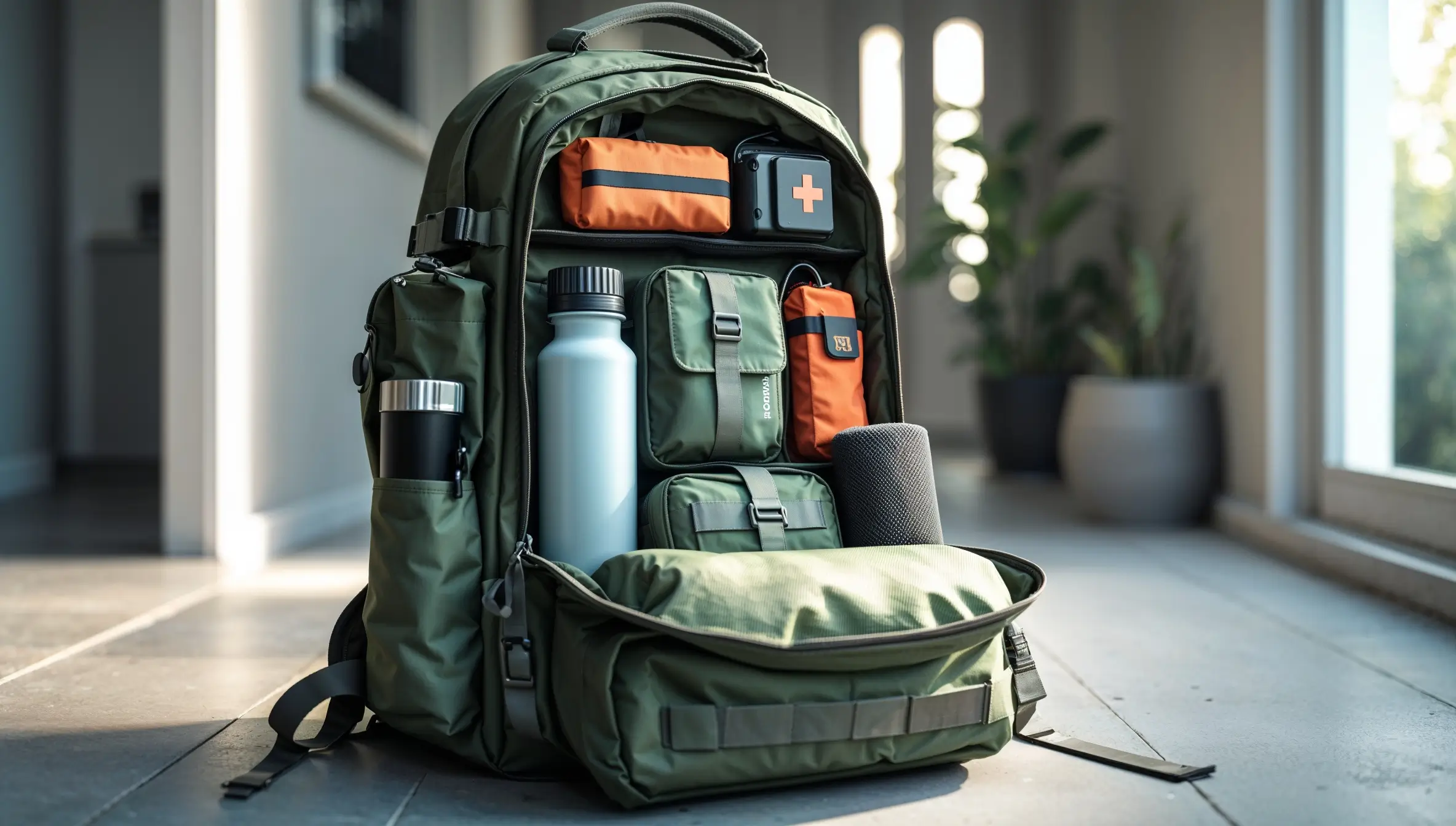
Ask them: "What would we need if the lights went out?" Let them think it through — they might surprise you. Give them a flashlight of their own and show them how to turn it on. Let them choose which snacks go into the family's emergency kit. Ask them to pick one toy or stuffed animal to include in a grab bag. These aren't just cute activities; they're building familiarity with the idea that the family prepares for things together.
You can turn a power-outage drill into an adventure. Have dinner by candlelight or flashlight one evening. Read stories with headlamps. Camp out in the living room. For a small child, these experiences are exciting and memorable, and they quietly normalize the idea that being without electricity is manageable, even cozy.
The critical thing is tone. If you're relaxed and upbeat, the child absorbs that this is normal and fine. If you're tense and serious, the child absorbs that something is wrong. At this age, how you present preparedness matters far more than what you actually say about it.
School-age children (ages 7–12): real involvement
Children in this age range are ready for more active participation and more concrete information. They can understand that emergencies happen sometimes, that the family has a plan for handling them, and that they personally have a role to play.
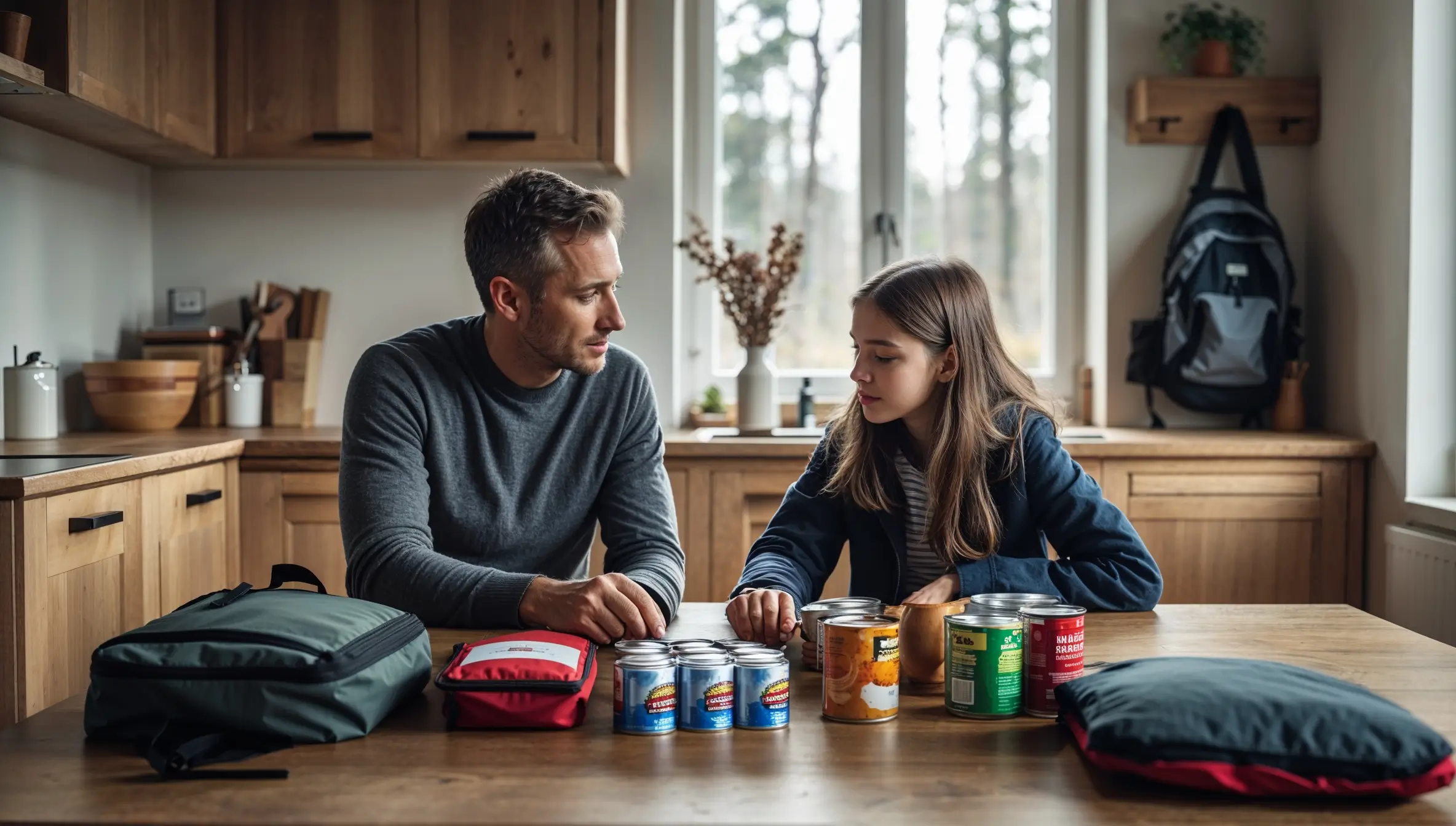
Give them real tasks. Teach them where the flashlights, first-aid kit, and emergency food are stored. Let them check battery levels and report back. Show them how to turn off the water main or where the fuse box is. Walk them through the family contact plan: who to call, what number to use, where to meet if you're separated. These are skills they'll carry for life, and the process of learning them builds genuine confidence.
This is also a good age to involve children in building and maintaining the household's emergency supplies. Let them help during the quarterly check — are the batteries still good? Has anything expired? Do we need to rotate the water? It turns maintenance from a chore into a family activity, and it means more than one person in the household actually knows what you have and where it is.
Let them ask questions freely, and resist the urge to over-reassure. "Will the power really go out?" doesn't need a breezy "Oh, probably not." A better answer is "Sometimes it does, and that's exactly why we're getting ready. Most outages only last a few hours, and we'll have everything we need." Children at this age can smell dishonesty, and they respect being spoken to straight.
Teenagers: genuine responsibility
Teenagers often get overlooked in family preparedness because they seem self-sufficient, or because getting them interested in anything the family does feels like an uphill battle. But teenagers are capable of taking on real responsibility, and giving them a meaningful role can engage them in ways that a lecture never will.
Consider assigning them ownership of a specific area. One teenager might be the household's "tech and charging" person — responsible for keeping power banks charged, knowing where all the cables are, and managing device charging during an outage. Another might take on first aid, completing a basic course and being the family's go-to for minor injuries. If your teen is interested in cooking, they could be in charge of the emergency food plan and learn to prepare meals without electricity.
Teenagers are also often the most digitally connected members of the household, which means they may be the first to see emergency alerts, social media reports, or community information during a crisis. Channeling that connectivity into a useful role — "keep us updated on what's happening" — gives them purpose and keeps them engaged rather than anxious.
Don't be surprised if your teenager resists at first. That's normal. But once they have a defined role with genuine autonomy, many teens rise to it remarkably well. They want to be taken seriously, and preparedness is a chance to do exactly that.
Routines: the anchor that holds
When a crisis actually arrives — a long power outage, extreme weather, a disruption to daily life — the single most stabilizing thing you can do for children of any age is to maintain routines. Mealtimes at roughly the usual hours. Bedtime at roughly the usual time, with the usual rituals — story, toothbrushing, lights out (even if "lights out" now means turning off a headlamp). Some form of structured activity during the day, whether it's schoolwork, reading, games, or helping around the house.
Routines work because they signal safety. When the structure of the day is familiar, the brain interprets the situation as manageable, even if the circumstances are unusual. When routines collapse — meals happen whenever, nobody goes to bed, screens are on all day, adults are visibly stressed — children lose their sense of predictability, and anxiety fills the void.
This doesn't mean you need to be rigid. Flexibility is fine. But having a loose framework to the day — we eat around these times, we do an activity, we rest — makes an enormous difference to how children experience a disruption. It also helps adults, for exactly the same reasons.
Talking about hard topics
There may be moments when children ask difficult questions. "What if the food runs out?" "What if you don't come home?" "What if someone gets hurt?" These questions deserve honest, calm answers — not dismissal and not dramatization.
The most effective approach is to acknowledge the feeling, provide truthful information, and then focus on what the family can do. "That's a good question, and I understand why you'd wonder about that. Here's what we've done to make sure we have enough food. And here's what we'd do if we needed more." The pattern is always: validate, inform, empower.
It's perfectly acceptable to say "I don't know everything that might happen, but I know that we've prepared well, and we'll figure things out together." Children don't need parents who have every answer. They need parents who are calm, honest, and actively doing something. That combination is deeply reassuring.
Building mental resilience
One of the most valuable things you can do, long before any crisis arrives, is to help children build a sense of their own resilience. Remind them of times they handled something difficult — a tough day at school, learning a new skill, getting through something they were nervous about. "Remember when you were scared about your first day at the new school, and then it turned out fine? You handled that really well."
These conversations build what psychologists call self-efficacy: the belief that you can cope with challenges. A child with strong self-efficacy approaches disruption thinking "I can handle this" rather than "I can't cope." That internal narrative makes an extraordinary difference in how they experience stress.
Preparedness, at its heart, is an act of optimism. It says: we believe the future is worth planning for, and we trust ourselves to handle whatever comes. When children absorb that message — through participation, through honest conversations, through seeing their parents take practical steps — they carry it with them far beyond any single emergency.
Next step
Involve the whole family in your next preparedness check. Open the Min Beredskap app together, walk through your household's status, and let each family member see what's covered and what still needs attention. Even the youngest can point to the flashlight icon and say "that's mine."