Practical tips for staying warm during an extended power outage — with or without a fireplace.
The reality of a winter power outage
A heated home in January feels so normal that it's easy to forget how quickly things change without electricity. Most Norwegian homes rely on electric heating — heat pumps, panel heaters, underfloor cables — and when the power goes out, the temperature starts dropping within hours. On a cold night, an unheated house can reach uncomfortable levels in four to six hours and genuinely dangerous levels within a day or two.
Norwegian authorities recommend that every household be prepared to manage without power for at least a week. That sounds like a long time, but extended outages do happen — storms, ice on power lines, infrastructure failures. The good news is that staying warm without electricity is entirely doable with some preparation and a few practical strategies. You don't need to be a survivalist. You just need a plan.
Retain the heat you already have
Before thinking about generating new heat, focus on keeping what you've got. A well-insulated house holds warmth far longer than a drafty one, and there are simple steps you can take even after the power cuts out.
Close interior doors to reduce the volume of space you're trying to keep warm. Pick one or two rooms — ideally ones with good insulation, small windows, and a southern exposure — and concentrate your household there. Hang blankets or heavy curtains over windows, especially single-pane ones. Windows are the biggest source of heat loss, and an extra layer makes a real difference. If you have rooms you're not using, close them off entirely.
Seal drafts around doors and windows with towels or rolled-up blankets. Put rugs or blankets on bare floors. These are low-effort measures, but collectively they slow down heat loss significantly and buy you time.
Layer your clothing
Your body is a heater. The trick is keeping the warmth it produces close to your skin instead of letting it radiate away. Clothing layers are the most reliable and energy-free warming strategy you have.
Start with a wool or synthetic base layer against your skin — it wicks moisture and insulates even when damp. Add a fleece or down mid-layer for insulation. If you're moving between rooms or stepping outside, throw on a windproof outer shell. Don't forget the extremities: a wool hat, warm socks (two pairs if needed), and gloves or mittens make a disproportionate difference because your body loses heat fastest from your head, hands, and feet.
It might feel odd to wear a hat and gloves inside your own house, but comfort trumps convention. Dress as if you're going for a winter walk, and the cold indoor temperature becomes manageable rather than miserable.
Alternative heating sources
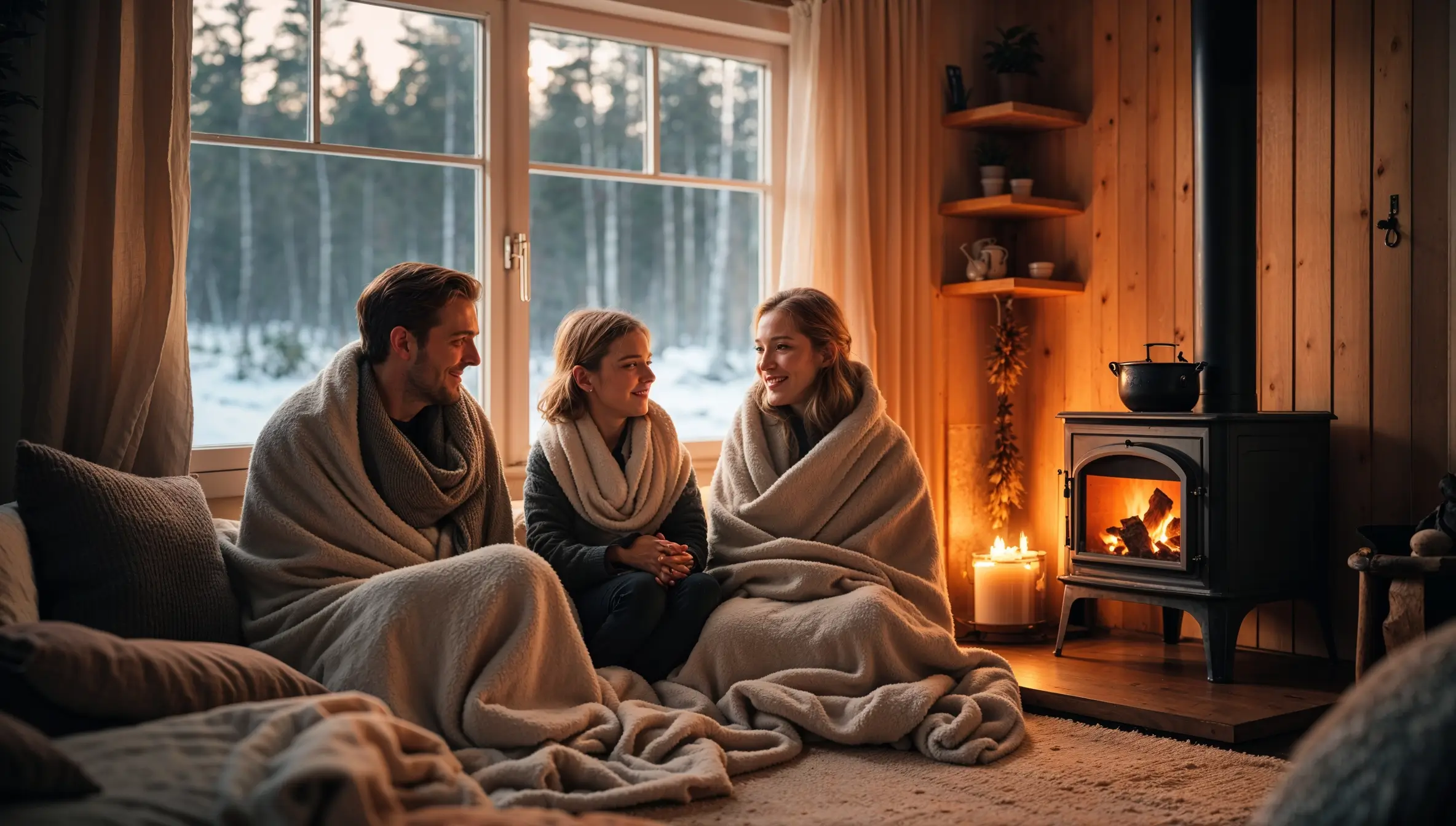
If you have a wood stove or fireplace, you're in a strong position. A wood stove is the most effective off-grid heating option for a Norwegian home, capable of keeping a main living area warm indefinitely as long as you have fuel. The key is having firewood ready — dry, split, and stored somewhere accessible. A week's supply for active heating is roughly half a cubic meter for a standard stove, though this varies with the stove's efficiency and outdoor temperature.
For homes without a wood stove, portable gas heaters designed for indoor use are an option, but they require serious caution. Any combustion heater produces carbon monoxide, and CO poisoning is a genuine and potentially fatal risk. Only use heaters explicitly rated for indoor use, ensure adequate ventilation by keeping a window cracked, and never run a gas heater while sleeping. A battery-operated CO detector is a wise investment if you plan to use any combustion-based heating.
Camping stoves aren't practical for room heating, but they're excellent for warming water and food. A hot meal and a warm drink do more for morale and core body temperature than most people expect.
Fire safety: respect the flame
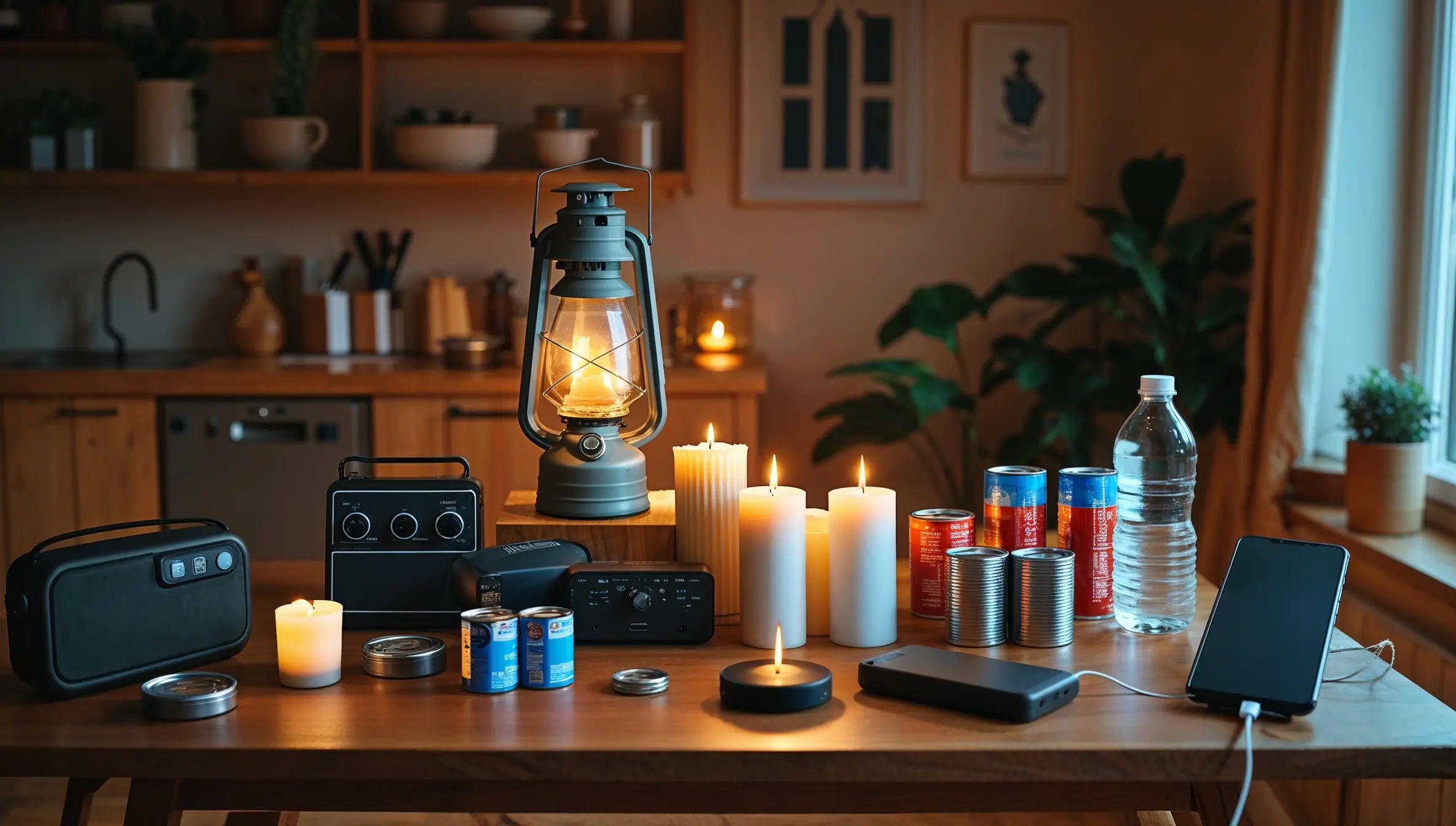
When the power is out, people turn to candles, gas heaters, and wood fires — all of which involve open flame. House fires during power outages are more common than you might think, precisely because people use heat and light sources they're not accustomed to.
Keep a fire extinguisher within reach and make sure it's charged. Test your smoke detectors — they should be battery-operated or have battery backup. Never leave candles unattended, and place them on stable, non-flammable surfaces away from curtains and fabric. If you're using a gas heater, store spare gas canisters outside the living area, in a well-ventilated space. Flammable liquids and an enclosed room are a dangerous combination.
Supervise children around any open flame or hot surface. In a power outage, routines are disrupted and kids may be closer to hazards than they would be normally. A calm, watchful approach prevents the kind of accidents that turn a difficult situation into a dangerous one.
Share the warmth: neighbor arrangements
Not every household has a wood stove or the means to heat independently. That's normal, and it's one of the strongest arguments for knowing your neighbors before a crisis arrives. If you can't heat your home, having a pre-arranged agreement with a neighbor or nearby friend who can makes the difference between discomfort and real danger.
If you're on the other side of that equation — if you have a stove or another reliable heat source — consider proactively offering shelter. Two families in a warm living room use less fuel than two families trying to heat two separate houses, and the social support matters almost as much as the physical warmth. Shared preparedness is the most resilient kind.
Talk to your neighbors now, while everything is fine. A simple conversation — "If the power goes out for a long time in winter, can we come to you? Or you to us?" — is all it takes. Most people are happy to agree and relieved someone brought it up.
Sleeping warm through the night
Nighttime is the hardest part of a cold house. Temperatures drop further, you're not moving, and sleep becomes difficult when you're shivering. A good sleeping setup makes an enormous difference.
Sleeping bags rated for winter use are ideal. If you don't have one, layer blankets and duvets generously — a blanket underneath you matters as much as the ones on top, because the mattress beneath you conducts heat away from your body. Wear your base layers to bed, including a hat and socks. A hot water bottle or a heat pack placed at your feet before sleep extends comfort for hours.
Sleep in the same room as the rest of the household. Shared body heat is real and effective, and staying together is also better for morale and safety. Close the door, block drafts, and the room will hold a surprisingly livable temperature through the night.
When to leave
There's a point at which staying home stops being the right call. If the indoor temperature drops below 10°C and you have no way to heat, it's time to consider relocating — to a neighbor, a family member, or a public warming shelter if one has been opened.
This decision is especially urgent if your household includes elderly people, young children, or anyone with a health condition affected by cold. Hypothermia develops gradually and can impair judgment, meaning the person most at risk may be the last to recognize the danger. Check on vulnerable family members and neighbors actively, don't wait for them to ask for help.
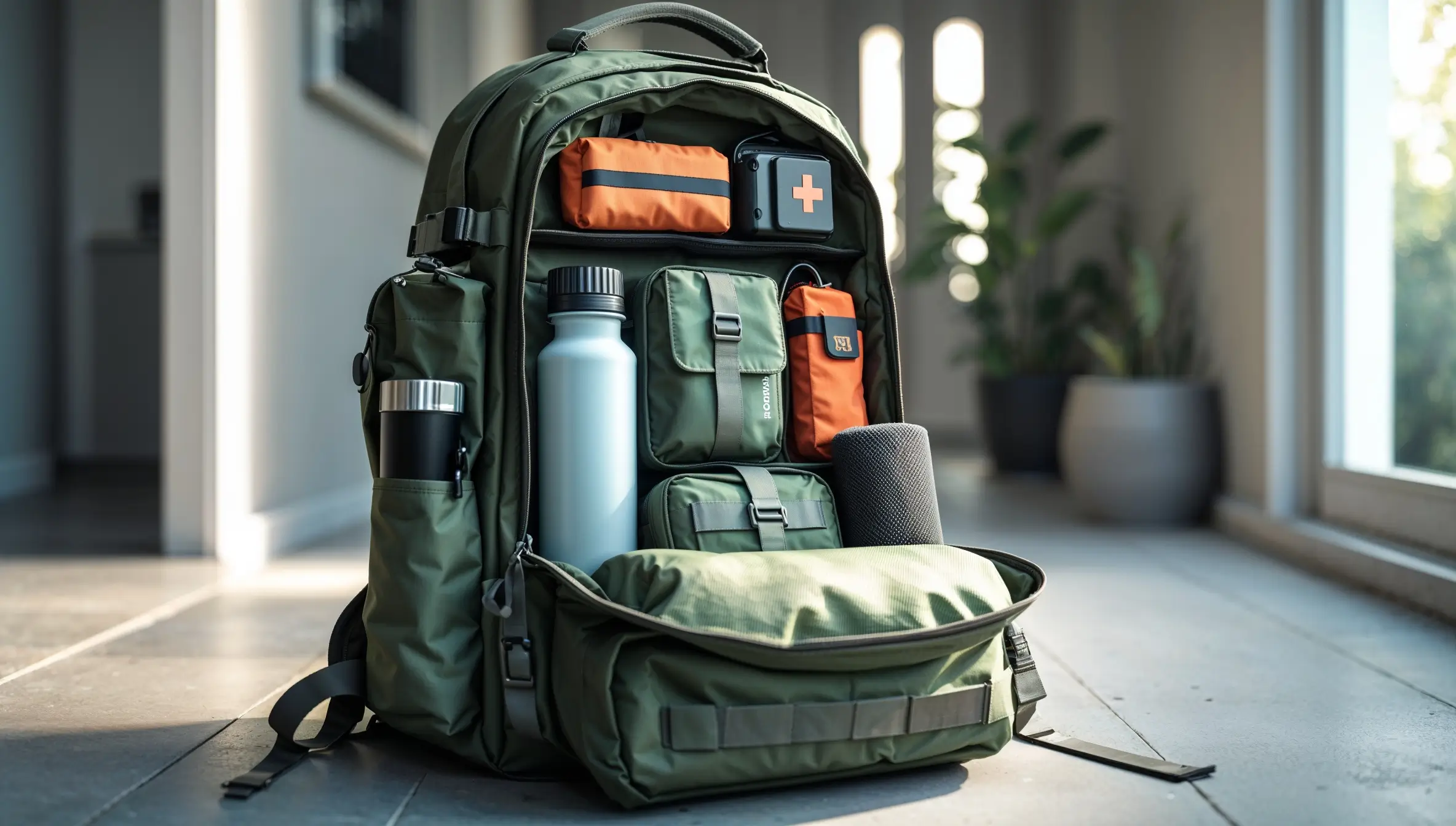
Leaving doesn't mean you've failed at preparedness. It means you're making a sound decision based on the situation. A grab bag with warm clothes, medications, and essentials makes the transition easier and faster.
Next step
Track your heating preparedness in Min Beredskap — firewood supply, backup heaters, blankets, and CO detectors. The app gives you a clear picture of where you stand and what to improve before winter arrives.