Comparing flashlights, candles and battery-powered lights for power outages.
When the lights go out
There's something primal about darkness. During a power outage on a bright summer afternoon, losing electricity is an inconvenience. But when it happens on a November evening in Scandinavia — when true darkness falls by four in the afternoon and won't lift until nine the next morning — the mood shifts quickly. Suddenly you can't see the contents of your kitchen drawers, can't read a label, can't safely navigate stairs. Children become unsettled, and even adults feel a low hum of anxiety that they wouldn't have expected.
Good emergency lighting isn't just about visibility. It's about safety — avoiding falls, finding medications, spotting hazards. And it's about well-being, too. A well-lit room feels manageable. A dark house with a single flickering candle feels like a crisis, even if everything else is fine. The investment in reliable lighting is small, but the return in comfort and confidence is enormous.
Headlamps: the unsung hero
If you only buy one type of emergency light, make it a headlamp. The reason is simple: it frees your hands. When the power is out, you still need to cook, carry a child, open tins, read instructions, find things in closets, and a dozen other tasks that require two hands. A flashlight in your pocket means you're constantly picking it up, putting it down, holding it in your teeth, or awkwardly clamping it under your arm. A headlamp just works — the light goes wherever you look.
Modern LED headlamps are remarkably efficient. A good one runs for dozens of hours on a pair of AAA batteries, and many have adjustable brightness so you can dial it down to a gentle glow for reading or ramp it up when you need to see across a room. Look for models with at least two brightness settings and a red-light mode, which preserves your night vision and is less disruptive if someone else is trying to sleep.
The ideal is to have one headlamp per family member, plus a spare or two. They're small and light enough to store anywhere, and even young children can wear them. Having your own light source gives everyone a sense of independence — a six-year-old with a headlamp can walk to the bathroom on their own instead of calling for help in the dark.
Flashlights still have their place
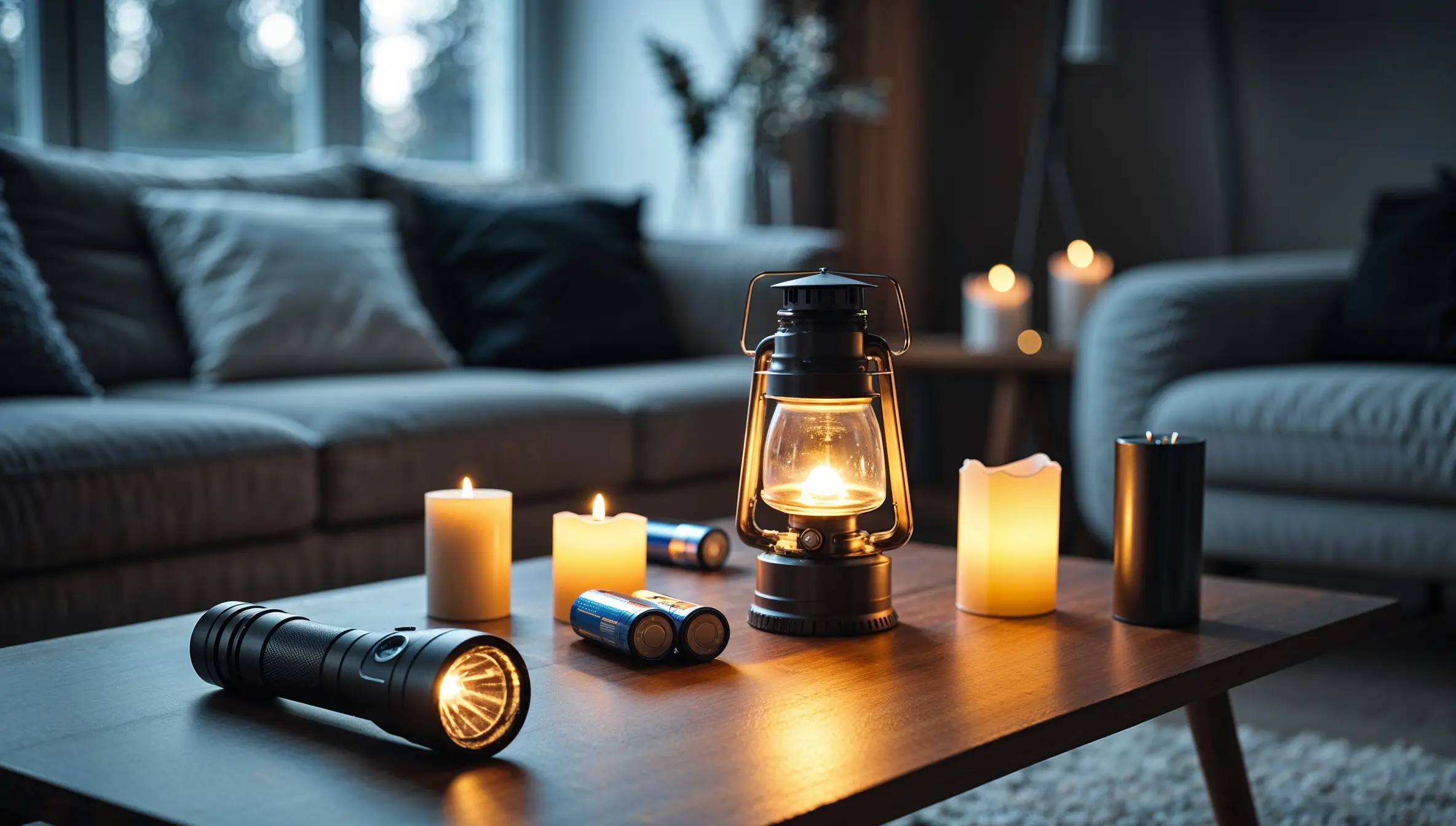
A proper handheld flashlight throws a more powerful, focused beam than most headlamps, which makes it better for checking the fuse box, looking outside, or signaling for help. Keep at least one good flashlight in your home, and make sure it takes a common battery size like AA or AAA rather than something exotic you'll struggle to find during a crisis.
Tactical-style flashlights with very high lumen counts are popular, but for home preparedness you don't need a spotlight. A mid-range flashlight with 200–400 lumens and a long runtime is far more useful than a blinding beam that drains its battery in an hour. Prioritize reliability and battery life over raw brightness.
One practical tip: attach a small loop of cord or a lanyard to your flashlight. In the dark, things get set down and lost within minutes. A lanyard around your wrist or a clip to hook it onto a shelf keeps it where you can find it.
Batteries: your fuel supply
All the flashlights in the world are useless without batteries, and batteries are surprisingly easy to forget until you need them. The simplest strategy is to standardize on one or two battery sizes — AA and AAA cover the vast majority of emergency lights — and keep a healthy stock at home. A pack of 20 AA batteries takes up less space than a paperback book and could keep your lights running for weeks.
It's wise to maintain a mix of disposable and rechargeable batteries. Rechargeable NiMH batteries are excellent for everyday use and reduce waste, but they have a weakness in a prolonged outage: once they're dead, they're dead unless you have a way to recharge them. That's where disposable alkaline batteries earn their keep — they hold their charge for years on the shelf and work right out of the pack.
If you do rely on rechargeable batteries, consider a small solar charger or a car-compatible battery charger as a backup. Even on a grey Nordic winter day, a decent solar panel can trickle-charge a set of batteries over the course of an afternoon. It's slow, but it extends your lighting capability significantly.
Candles: warm glow, real risk
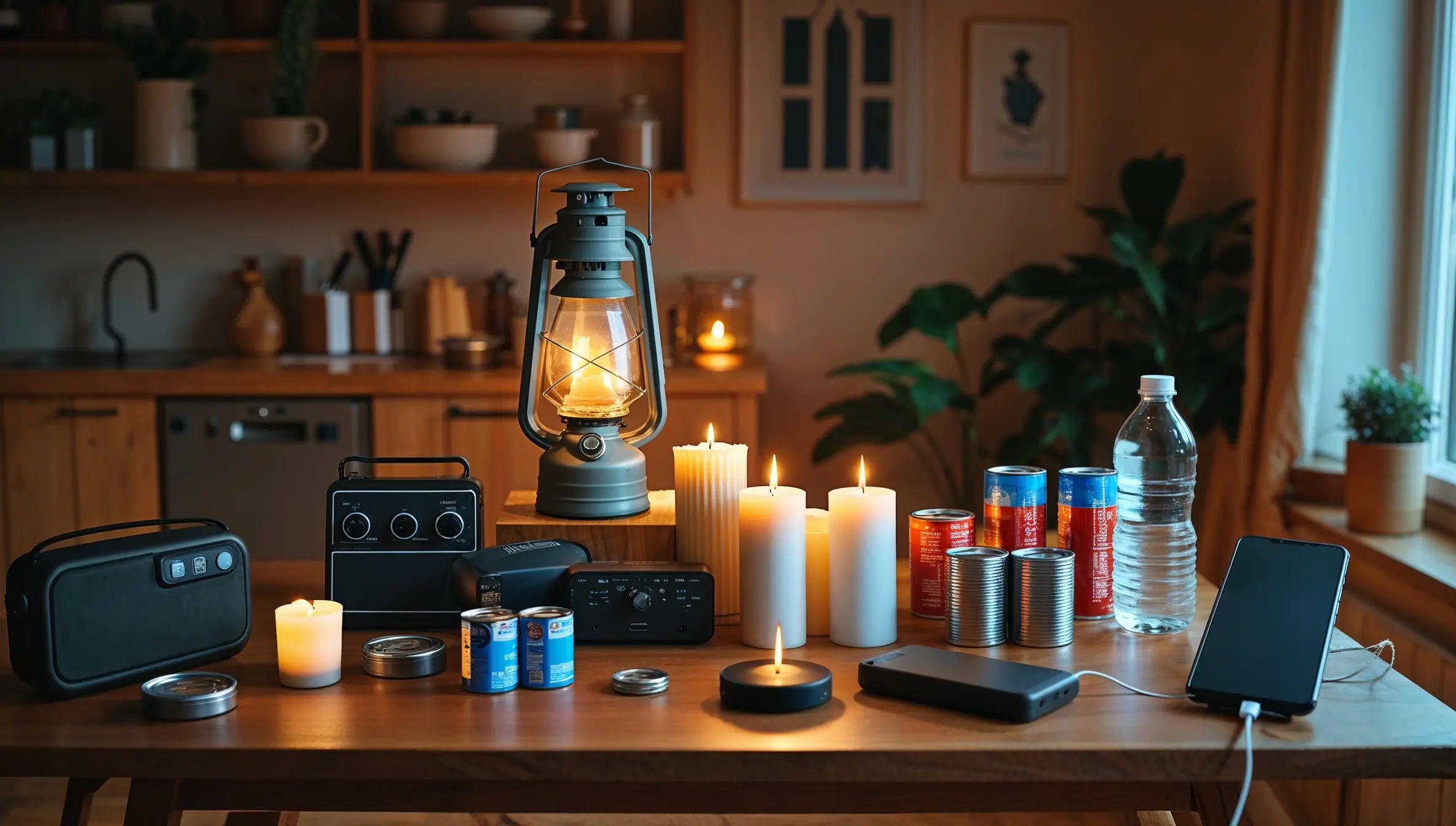
Candles remain the classic power-outage light source, and there's no denying their charm. A few candles on the kitchen table create a warm, calming atmosphere that no LED can quite match. But candles are open flames, and the statistics on house fires during power outages are sobering. When people pull out candles they haven't used in months, place them on unsteady surfaces, or fall asleep without extinguishing them, fires happen.
If you use candles, treat them with genuine respect. Place them in sturdy holders on stable, heat-resistant surfaces. Keep them well away from curtains, paper, and anything that might be knocked into them — this includes curious pets and restless children. Never leave a burning candle in an unattended room, even for a moment. And make sure your smoke detectors have fresh batteries before candle season begins, not after.
A useful middle ground is to use candles for atmosphere in a common room where adults are present, while relying on LED lights everywhere else. That way you get the psychological comfort of candlelight without multiplying the fire risk across every room in the house.
Solar lanterns and crank lights
Battery-free lights have come a long way. Solar-powered lanterns charge during the day and provide hours of light at night, which makes them ideal for extended outages where battery supplies might run thin. Inflatable solar lanterns are particularly clever — they pack flat, weigh almost nothing, and provide a surprisingly pleasant diffused glow that fills a small room.
Crank-powered flashlights and lanterns generate light through a hand-turned dynamo. A minute or two of cranking typically gives you 15–30 minutes of light. They're not anyone's first choice for sustained illumination, but as a backup that never runs out of fuel, they're hard to beat. Keep one in your emergency kit and you'll never be left in total darkness.
The honest trade-off with solar lights in a Nordic context is that winter daylight is both short and weak. A solar lantern that charges fully in two hours of Australian sun might need an entire short winter day near a south-facing window to reach a partial charge. They're a valuable supplement, but don't rely on them as your only light source from October to March.
Placement and the family light kit
Having excellent lighting equipment is only half the job — everyone in the household needs to know where it is and how to use it. The worst time to rummage through drawers looking for a flashlight is when you can't see. Designate one specific spot in your home as the "light kit" location. A shelf by the front door, a drawer in the hallway, a hook inside a kitchen cabinet — it doesn't matter where, as long as every family member knows the spot by heart and can find it in pitch darkness.
For larger homes, consider placing a small light source in each key room: a headlamp in the bedside drawer, a flashlight in the kitchen, a lantern in the living room. That way nobody has to stumble through a dark house to reach the central kit before they can see anything at all.
It's also worth doing a brief "lights out" drill once or twice a year. Turn off the lights one evening and see whether everyone can find their light source, turn it on, and navigate to the kitchen or a meeting point. Children often find this genuinely fun, and it builds the kind of muscle memory that pays off when a real outage hits.
Your car as a charging station
Don't overlook the large battery sitting in your driveway or parking space. Your car's 12-volt outlet or USB port can charge power banks, rechargeable flashlights, and phones. A simple USB car charger costs almost nothing and turns your vehicle into a backup power source that holds a tremendous amount of energy.
If you're charging devices from the car, start the engine periodically to avoid draining the car battery. Ten to fifteen minutes of running the engine every few hours is usually sufficient to keep the battery topped up. Always do this outdoors or in a well-ventilated garage — never in an enclosed space where carbon monoxide can accumulate.
For households that already keep a power bank for everyday phone charging, designating a second power bank as a "preparedness" unit — kept charged and stored with your emergency kit — is a small step that covers a lot of ground. It can keep LED lights, phones, and small devices running for days.
Next step
Take a quick look at your current lighting situation: do you have at least one headlamp per family member and a stock of fresh batteries? Log your emergency lighting gear in the Min Beredskap app to see where your household stands and get a clear picture of what might still be missing.