Smart storage and prioritization when you don't have a garage or basement.
You don't need a basement to be prepared
One of the most common reasons people give for not preparing their household for emergencies is space. "I live in a small apartment — where would I put it all?" It's a fair question, and it's true that a detached house with a garage, basement, and garden shed offers obvious advantages when it comes to storing supplies. But the idea that apartment living makes preparedness impractical is a myth. Some of the most well-prepared households in Norway are in city apartments, because preparedness at its core is about smart prioritization and organization, not sheer volume of stuff.
The reality is that most realistic emergency scenarios — a power outage lasting several days, a water supply disruption, a winter storm that keeps you indoors — can be handled with a surprisingly modest collection of supplies. You don't need a warehouse. You need the right things in the right places, a clear plan, and ideally a few neighbours you can count on. Everything discussed in this article can fit within a normal apartment without sacrificing living space or turning your home into a storage facility.
Prioritize ruthlessly
When space is limited, everything you store needs to earn its place. The temptation with preparedness can be to accumulate — one more gadget, one more tool, one more specialized item — but in a small apartment, that approach quickly becomes counterproductive. Instead, focus on the items that address the most critical needs in the most likely scenarios.
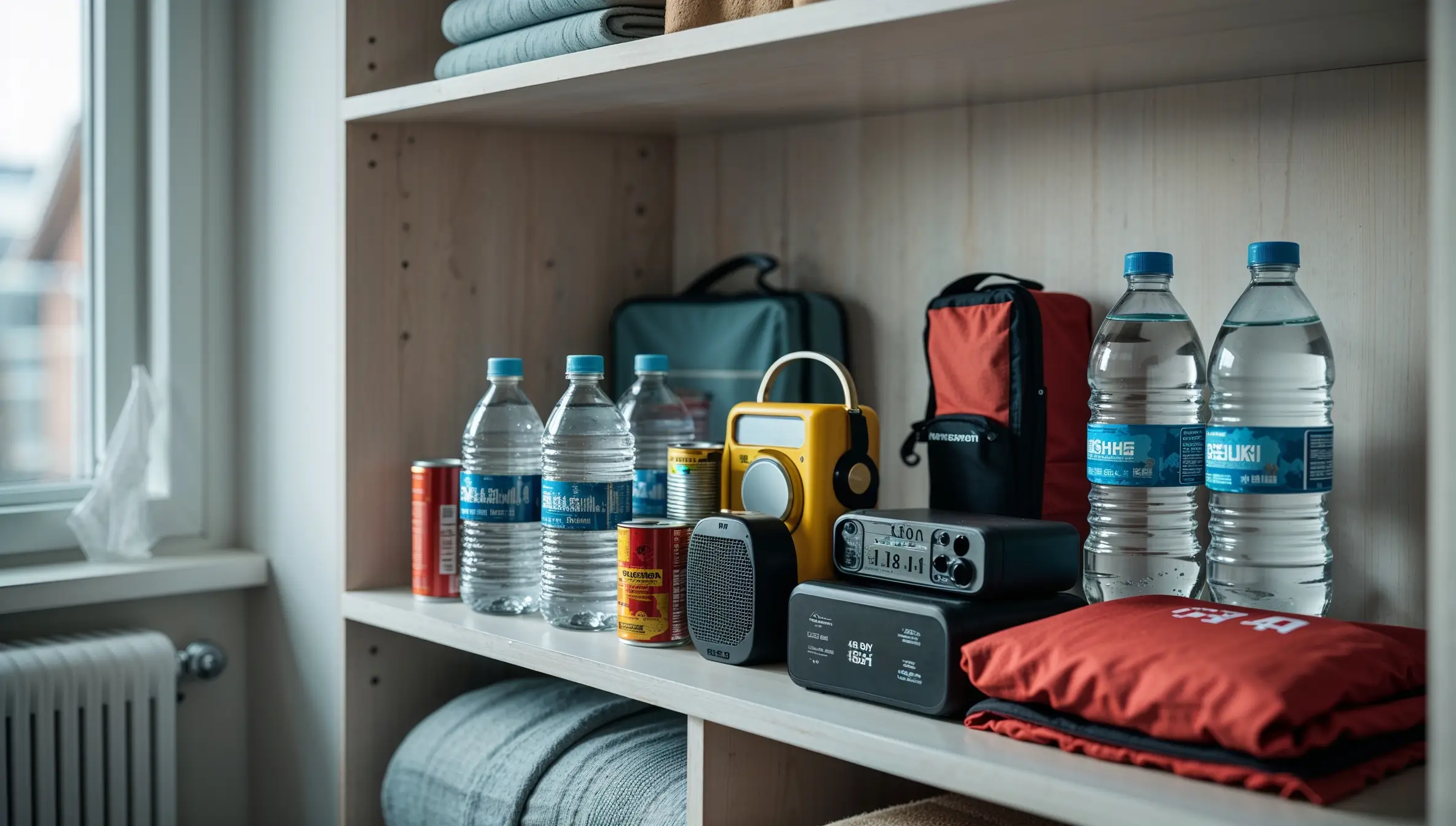
Water comes first, always. Even a modest supply of 10–15 liters per person gives you several days of drinking water. Next is food — enough non-perishable items for roughly a week. Then a reliable light source with spare batteries, a basic first aid kit, warm clothing and blankets, and a way to receive information (a battery-powered or hand-crank radio). These five categories cover the essentials for the vast majority of emergencies ordinary households face.
Everything beyond this core is a bonus, not a necessity. A camping stove is nice to have but not essential if you've chosen food that can be eaten cold. A water filter is useful but secondary if you have enough stored water for a week. Be honest about what you actually need versus what feels satisfying to own, and let that discipline guide your purchases.
Creative water storage
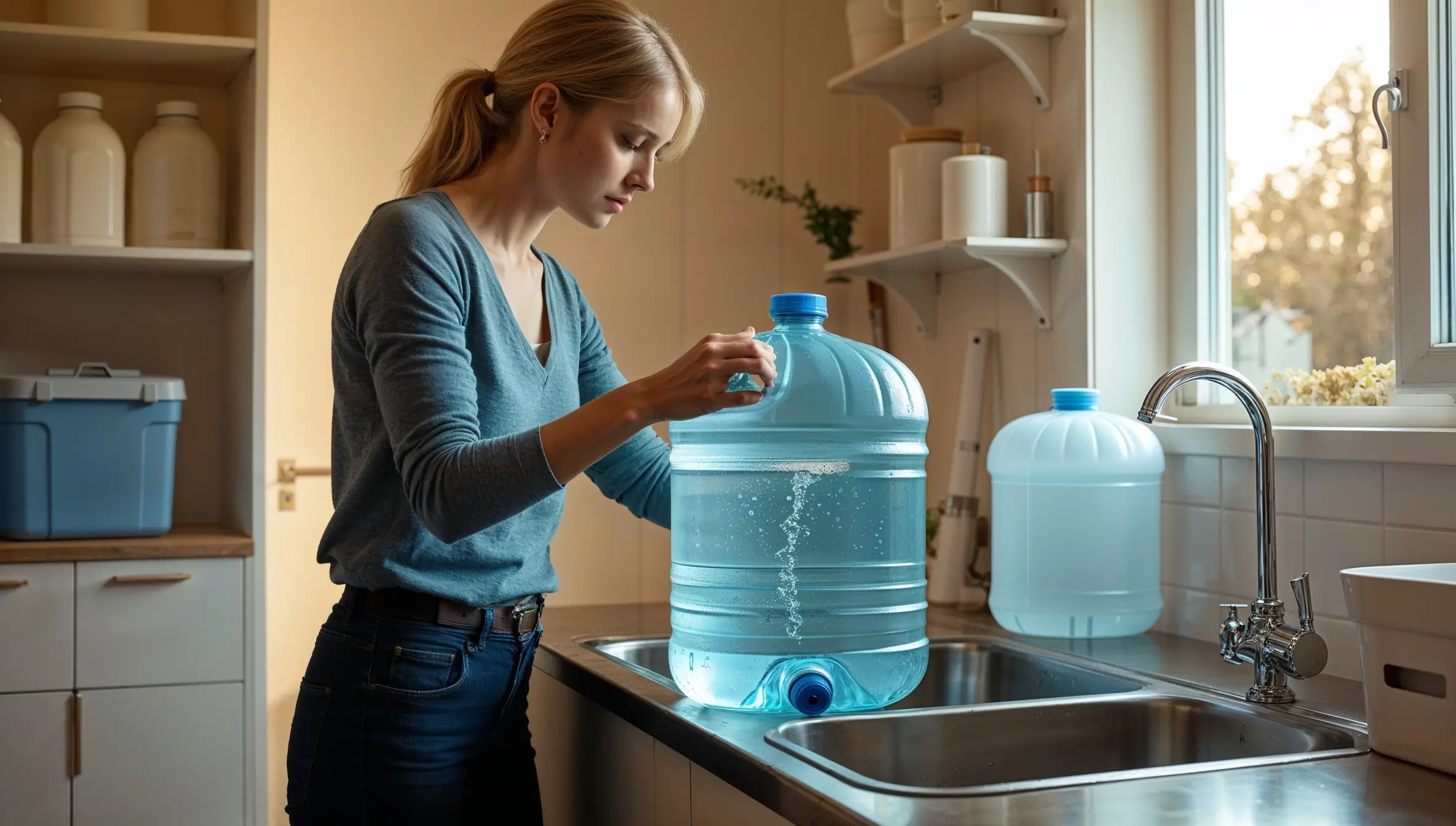
Water is bulky and heavy, which makes it the trickiest item to store in a small apartment. But with a little creativity, most households can find room for more than they think. The key is to distribute it rather than trying to find one large space for all of it.
Under beds is prime real estate for water storage. A row of 1.5-liter bottles lines up neatly beneath a standard bed frame and holds a surprising amount. The top of kitchen cabinets, the back of wardrobe shelves, and corners of closets are all spaces that typically go unused. Even a few bottles tucked behind shoes at the bottom of a hallway cupboard add to your total without getting in the way.
One particularly clever approach for apartment dwellers is to freeze water in small food-grade containers. This serves double duty: the frozen containers act as backup drinking water that you can thaw when needed, and in the meantime, they function as cold packs that help keep your freezer contents safe for longer during a power outage. Fill containers only about three-quarters full to allow for expansion as the water freezes, and use sturdy plastic that won't crack. This is one of those rare preparedness strategies that costs almost nothing and provides genuine everyday value even when there's no emergency.
Vertical thinking and hidden spaces
Apartment preparedness is an exercise in seeing storage potential where you previously saw empty wall or dead space. Think vertically. The backs of closet doors can hold hanging organizers — the kind designed for shoes or accessories — repurposed for flashlights, batteries, a radio, and first aid supplies. High shelves that you'd normally ignore because they're hard to reach are perfect for items you only need in an emergency.
Under-bed storage containers with low profiles are widely available and ideal for keeping a neatly organized prep kit out of sight. A single flat container can hold a flashlight, spare batteries, candles, matches, a basic first aid kit, and a few emergency blankets. If you have a hallway with any shelf or cabinet space, consider dedicating one shelf to your preparedness essentials — it keeps everything visible and accessible, which is exactly what you want when the lights go out.
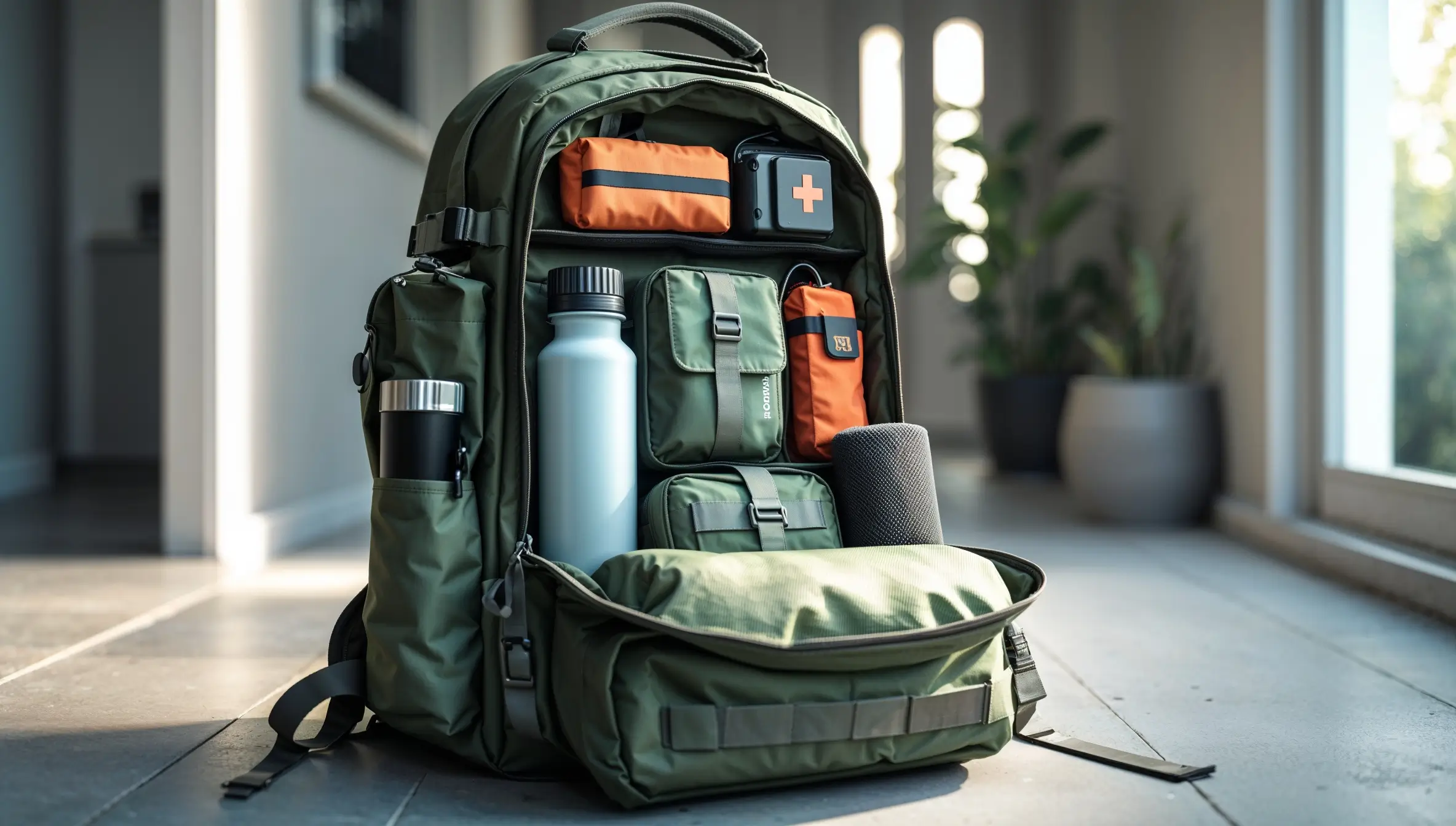
Your grab bag — a small backpack with essentials for leaving quickly if needed — hangs by the front door. It takes up no more space than a jacket and contains copies of important documents, basic toiletries, a change of clothes, some energy bars, a flashlight, a phone charger, and any critical medications. Having it packed and ready means you don't waste precious time gathering things if you need to evacuate.
Your kitchen is already a prep center
Here's something apartment dwellers sometimes overlook: your everyday kitchen pantry is your food reserve. There's no need for a separate dedicated storage area. The same shelves that hold your regular canned goods, pasta, rice, and crackers can simply hold more of them.
The strategy is simple and nearly effortless. Each time you shop, buy two or three extra non-perishable items — an extra can of tomatoes, an additional bag of pasta, a few more tins of fish. Place new purchases at the back and pull from the front, so everything rotates naturally. Within a month or two, your pantry will hold a comfortable buffer of a week or more without looking or feeling any different from a normally well-stocked kitchen.
This approach has the enormous advantage of ensuring that your emergency food supply consists of things you actually like to eat and know how to prepare. There are no mystery freeze-dried packets expiring in a forgotten corner. Just more of the food you already cook with, ready to sustain you if the shops are inaccessible for a few days.
Shared building preparedness
One of the underappreciated advantages of apartment living is that you share a building with other people. In a crisis, this can be a remarkable asset if you've laid even a little groundwork beforehand. A single household might struggle to store large quantities of water, but a building with a common storage room or basement can maintain a shared water reserve that supplements what each apartment keeps individually.
Raise the topic at your next building meeting or with your housing cooperative's board. Many Norwegian borettslag and sameier are increasingly receptive to preparedness discussions, especially after recent extreme weather events. Shared resources might include stored water, a building-wide first aid kit, a communal camping stove, or simply an agreed plan for who checks on elderly or vulnerable residents during an outage.
The conversation itself has value even if it doesn't lead to shared equipment right away. Just knowing which of your neighbours has a camping stove, who has medical training, and who might need extra help during an emergency creates a network of mutual support that no amount of individual stockpiling can replace.
Your neighbour network
If there's one thing that separates apartment preparedness from house preparedness, it's the proximity of other people. In a detached house, your nearest neighbour might be fifty meters away. In an apartment building, they're through the wall. This closeness is your single greatest resource in a crisis, but only if you've invested a little in those relationships before the emergency arrives.
You don't need to become best friends with everyone on your floor, but knowing people by name and having had at least a casual conversation about preparedness makes an enormous difference when something actually goes wrong. It means you can knock on a door and ask for help without it being strange. It means someone will check on you if they haven't seen you in a couple of days during a crisis. It means skills and supplies can be shared rather than duplicated.
Consider the practical efficiency: if one neighbour has a camping stove and fuel, another has extra water storage capacity, and a third has first aid training, the combined preparedness of those three households is far greater than any one of them alone. Informal coordination like this doesn't require meetings or plans on paper — just a few conversations and a willingness to help each other out.
What you can safely skip
Part of smart apartment preparedness is knowing what not to bother with. You don't need a generator — they're noisy, produce dangerous fumes, and require fuel storage that's impractical and often prohibited in apartment buildings. You don't need 200 liters of water or a month's worth of freeze-dried food. You don't need a comprehensive tool kit or a wood-burning stove.
The scenarios that most people in apartments will actually face are measured in days, not weeks. A three-to-seven-day power outage. A temporary water disruption. A storm that makes leaving the building unwise for a day or two. For these situations, a week's supply of water, food, and basic comfort items is more than adequate. Going beyond that offers rapidly diminishing returns, especially when it means sacrificing living space in a home that's already compact.
A warm sleeping bag or extra blankets, a reliable light source, a battery-powered radio, and enough food and water for a week — combined with good neighbours and a clear head — will see you through the vast majority of realistic emergencies. Preparedness in a small space isn't about building a bunker. It's about being organized, having the right few things, and knowing that the people around you are ready too.
Next step
Getting started with apartment preparedness is easier than you might think, and the Min Beredskap app is designed to help you prioritize based on your actual living situation. Open the app to see which essentials you still need, track what you already have, and get practical suggestions that work for small spaces.